Deepwater Riser & Tubular Recovery Systems
Engineering high-reliability subsea tubular protection and riser recovery systems for deepwater decommissioning operations.
The Innovation
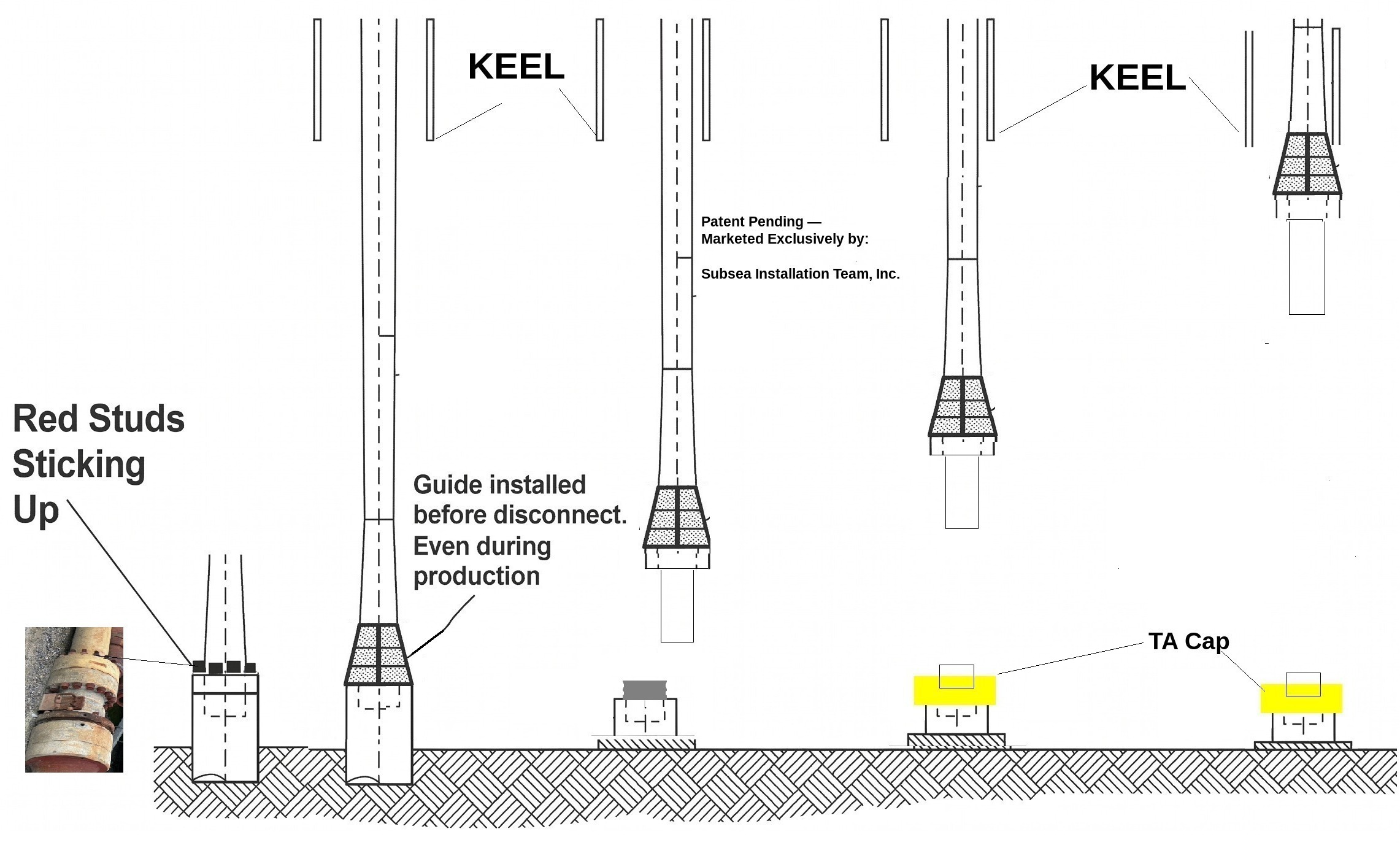
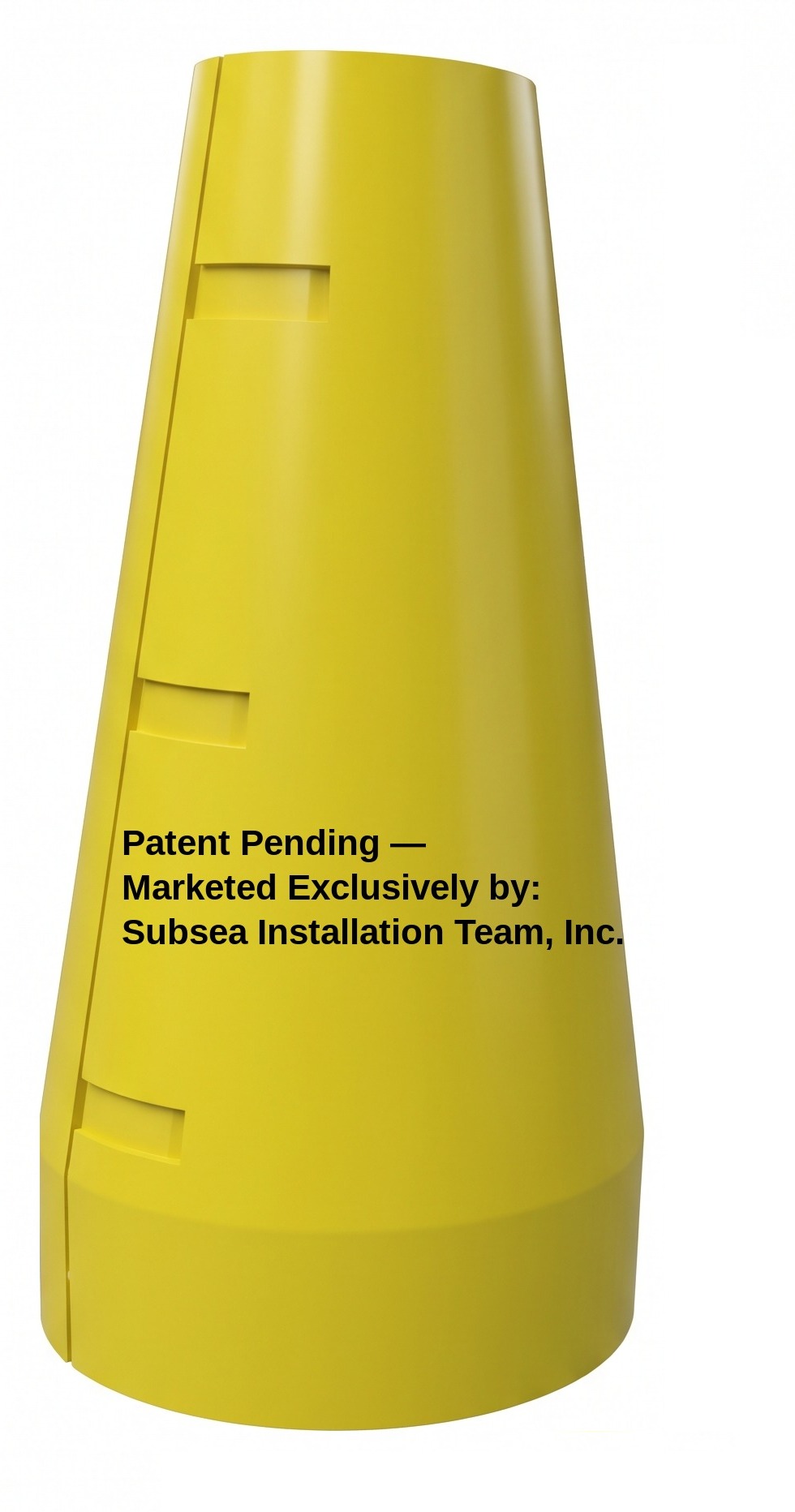
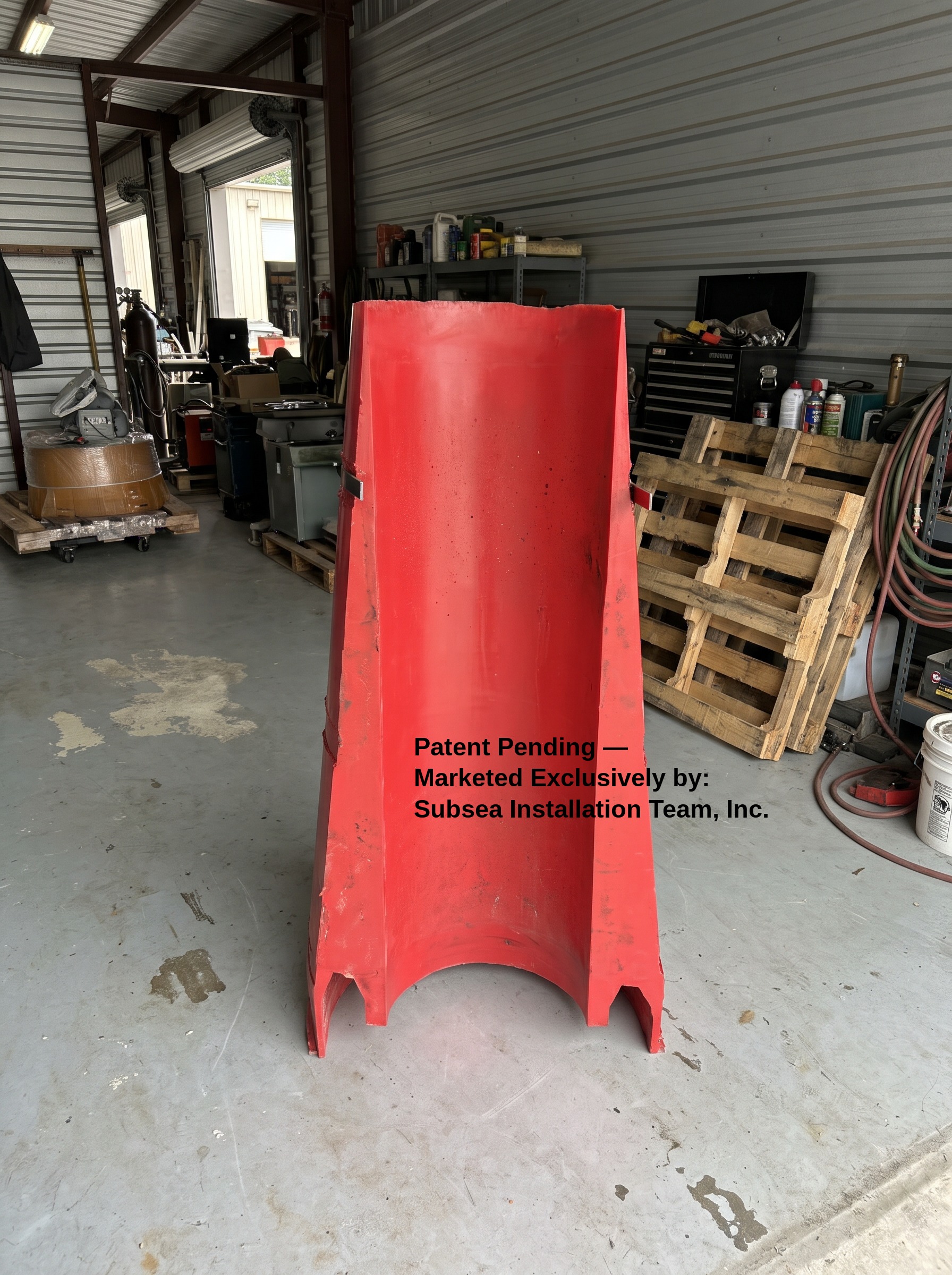
Our patent-pending modular riser and tieback recovery guide wraps securely around the base of a subsea riser connector or tieback connector. Engineered using nominal data book dimensions and reference design parameters, the two-piece conical shroud provides a smooth, ramped, and tapered sleeve that allows the connector and flange to cleanly reenter the platform keel—eliminating square shoulders or exposed studs from getting hung up.
- Cross-Manufacturer Compatibility: Flexibly accommodates varying manufacturer riser ODs, flange geometries, and protruding stud configurations.
- Independent Installation: Installed entirely independently—requiring zero operational assistance or footprint from the SPAR, TLP, or drilling rig.
Optimized Workscopes & Applications
Decommissioning Subsea Risers
Engineered to center and guide complex riser tiebacks or subsea connectors smoothly through platform keels during deepwater decommissioning.
Decommissioning SPAR Risers
Eliminates multi-hour ballasting and trimming bottlenecks caused by unguided square-edge SPAR keels during heavy riser pulls.
Decommissioning TLP Risers
Prevents costly snagging of protruding studs and blunt connector flanges on Tension Leg Platform keels, protecting critical asset schedules.
Pulling Subsea Risers
Decouples subsea prep from the rig spread to remove expensive ROV support vessel day-rate standby across 3-to-7-day pull sequences.
Technical Specifications
- Supported Connectors: Subsea riser & tieback connectors (custom-engineered to OEM flange profiles)
- Material & Construction: High-strength marine polyurethane with flush mechanical locking bands
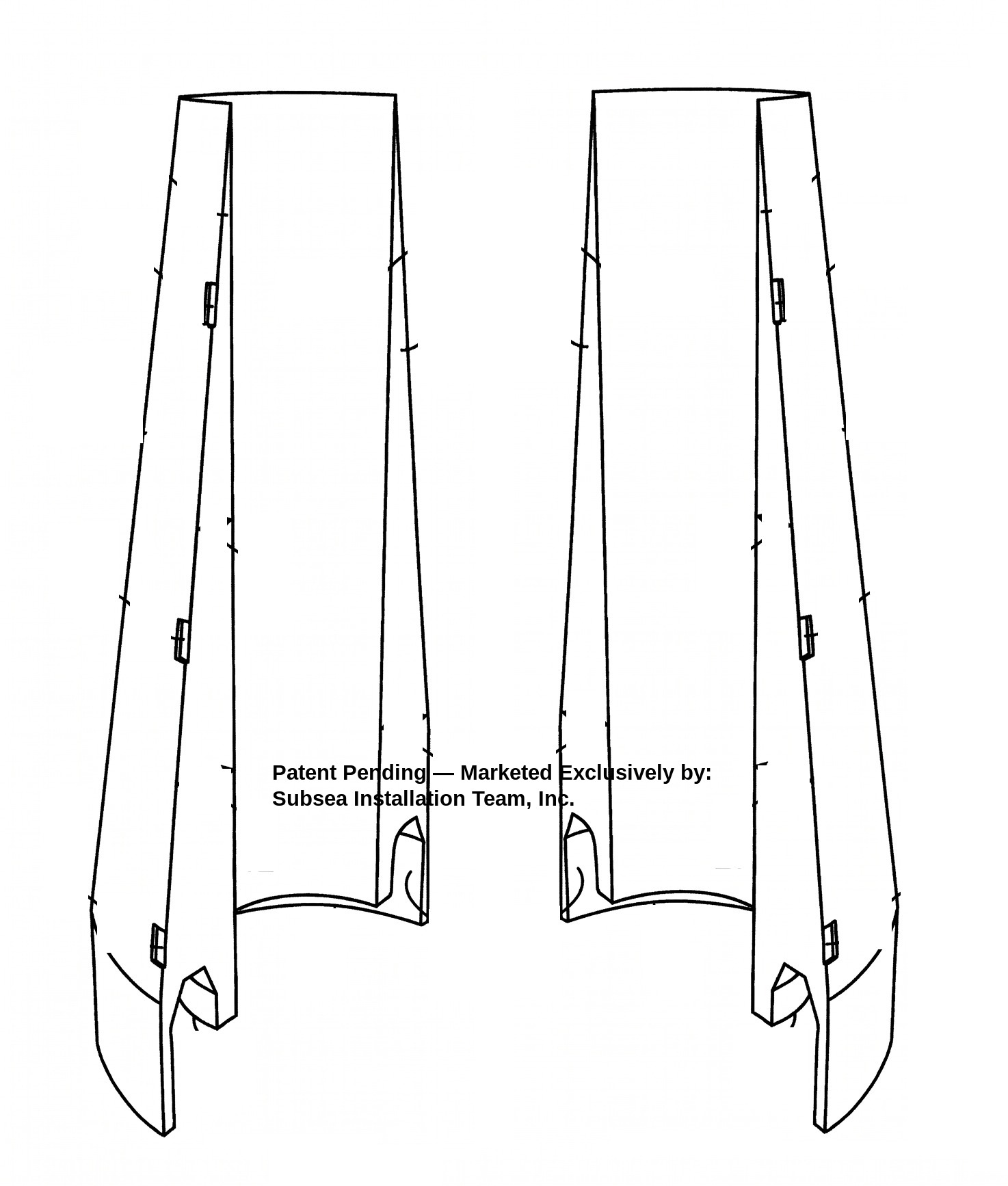
- Deployment Method: ROV-installed two-piece hermaphroditic shroud (pre-disconnect)
- Drawings & CAD: General arrangement & dimensional drawings available upon engineering request
Field Operations & Deployment Workflow
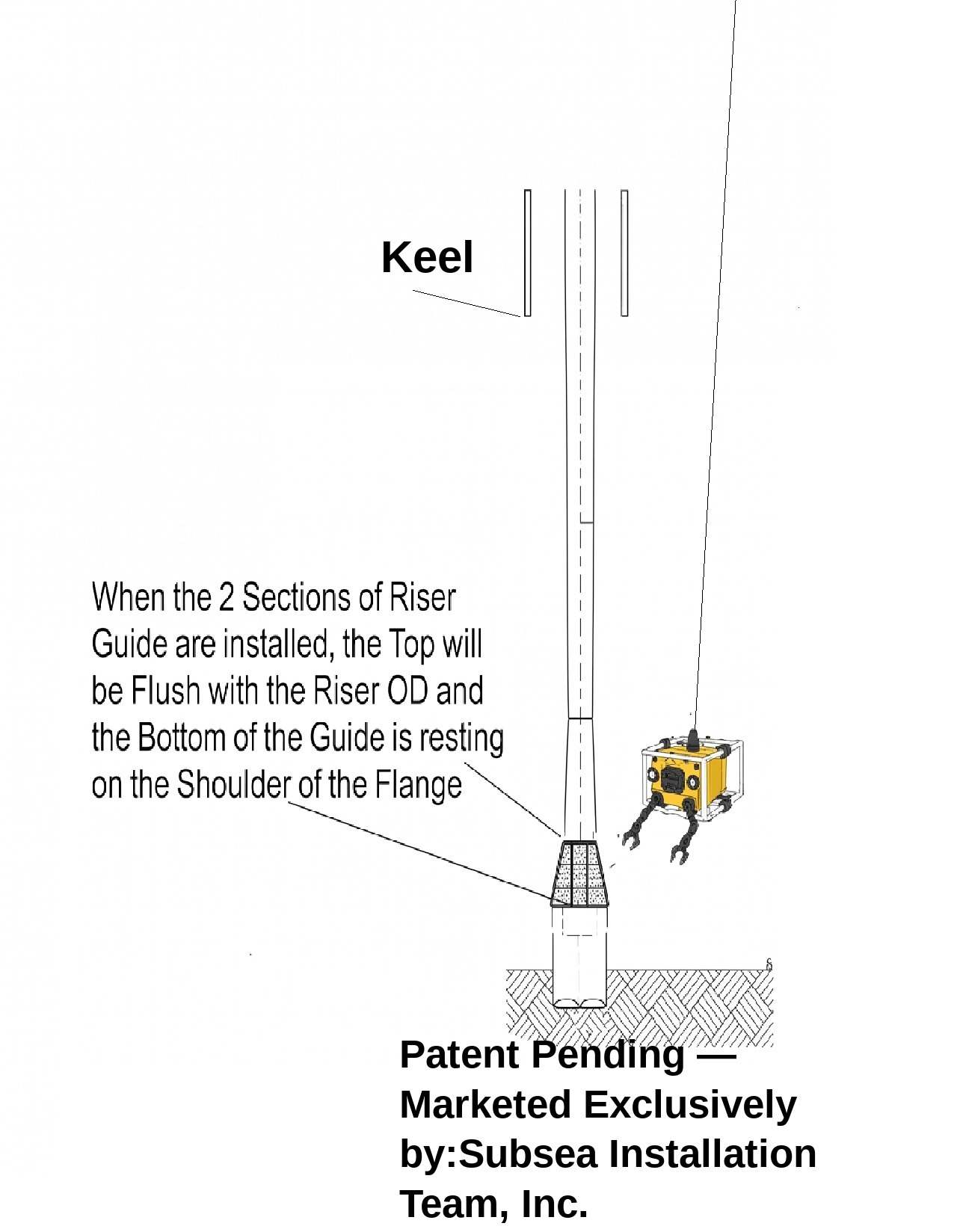
- Subsea Basket Prep: Support vessel loads the modular riser guides plus spares into a subsea basket and navigates to location.
- Independent Installation: The ROV installs the lightweight modular shroud halves around the selected connector and secures them with flush-mounted locking bands before the subsea connector is unlatched.
- Immediate Vessel Demob: The ROV support vessel departs location entirely, eliminating the full-rate ROV standby day-rate across the 3-to-7-day pull sequence.
- Autonomous Blind Pull: The smooth tapered conical guide centers and steers the studded flange smoothly through the blunt platform keel, saving significant rig time and eliminating keel-snag delays.